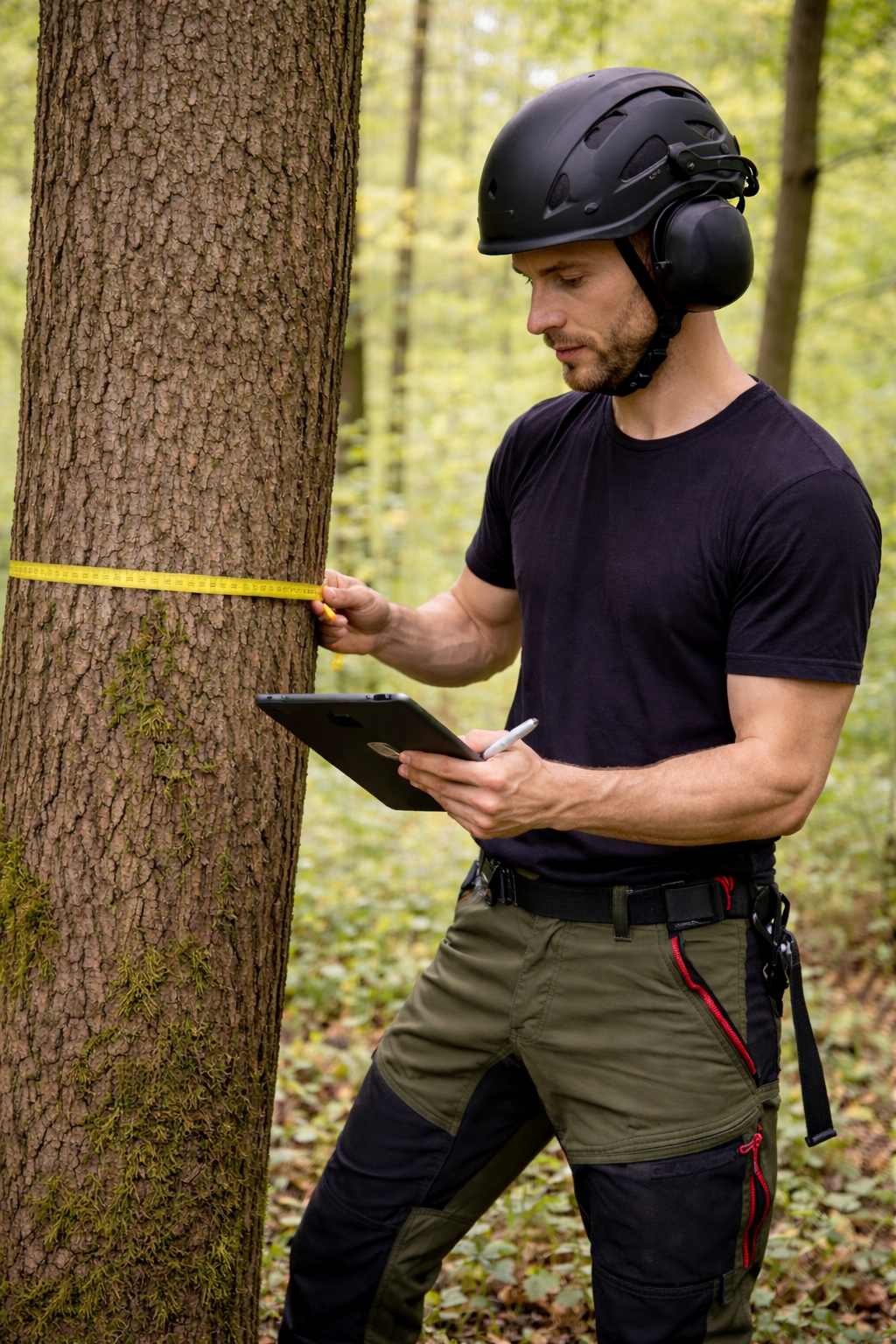
Tree Surveyance…
Answered…
PHIL

Tree Surveyor & Arborist
Our lead tree surveyor brings over 30 years of hands-on experience in the arboriculture industry. With a deep understanding of tree health, safety, and management, he will provide clear, practical advice you can trust. His extensive background ensures every survey is carried out with professionalism, accuracy, and care for both trees and people.
-
A tree health and risk survey is an arboricultural inspection that assesses:
The biological condition of trees
The likelihood of failure (branches, stem, or roots)
The risk posed to people, property, or infrastructure
Its purpose is risk management, not tree removal by default.
-
1. Tree Condition
Inspectors look for:
Leaf size, colour, density, and seasonal timing
Dieback or deadwood
Epicormic growth (stress response)
Structural defects (cracks, cavities, included bark)
2. Pests & Diseases
Common indicators:
Fungal fruiting bodies (decay)
Insect exit holes or galleries
Bark lesions or cankers
Root plate decay signs
3. Vitality
Trees are classified as:
Good… healthy growth, no significant defects
Fair… minor stress or early decline
Poor… declining health, structural weakness
Dead/Dying… self explanatory
-
1. Likelihood of Failure
Dead or overextended branches
Decay in trunk or roots
Poor previous pruning
Leaning trees with disturbed root plates
2. Likelihood of Impact
Risk increases if the tree is near:
Roads or footpaths
Buildings
Playgrounds or seating areas
Power lines
3. Consequences of Failure
Injury to people
Damage to buildings or vehicles
Obstruction of highways or services
Risk is usually expressed as Low / Moderate / High or by a scoring system.
-
Our surveys use a combination of:
Tree condition
Target occupancy
Failure probability
This avoids unnecessary removal and supports proportionate management.
-
Our survey may recommend:
Deadwood removal
Crown reduction or thinning
Monitoring (e.g. re-inspect in 6–12 months)
Root protection or soil improvement
Removal only if risk cannot be mitigated
-
Public open spaces
Schools and hospitals
Commercial sites
Residential developments
Following storm damage
Insurance or liability concerns
-
The cost of a tree health and risk survey can vary depending on several factors, including the number of trees, site size and accessibility, tree size and condition, and the level of detail required within the report. Additional considerations may include travel distance, the need for specialist assessment equipment, and whether repeat inspections or monitoring are recommended. As every site and tree population is unique, surveys are priced on an individual basis to ensure the assessment is appropriate, proportionate, and compliant with current arboricultural best practice. Clients are therefore encouraged to contact us to discuss their requirements and obtain a tailored quotation.